
Recently I attended a local writing critique group for the first time. While introducing myself, I mentioned that I write at a communal blog for adopted women (referring to Lost Daughters).
“A what?” the woman seated across from me asked.
“A blog for adopted women,” I said.
“Adopted women?”
“Women who were adopted as children,” I said.
“Oh,” she said, “I guess there’s a group for everything these days.”
Maybe it was those words “adopted” and “women” together that threw her. The adopted are children, aren’t they? How many people realize that when those children grow up, they are still adopted? There is no end to adoption for adoptees.
***
In a graduate writing class, I once wrote about laws that sealed adoptees’ birth certificates. Presenting the piece to my group meant I had to first explain that adoptees’ birth certificates contain information that is not factually accurate. No one in that group had ever heard of an “amended” birth certificate. They’d had no idea that many adopted people do not even know where they were born.
Yet, many of us adoptees must live without this basic information about the beginning of our lives that the non-adopted take for granted.
***
I answered a request once from a prospective adoptive mother who wanted us at Lost Daughters to post a link to her and her husband’s “Dear Birth Mother” site in the hopes that our readership could help her procure a baby. This woman had no inkling that adoptees might find her request offensive. She had never considered that someone who is adopted might not want to play a role in another person being separated from his/her biological family in order to be adopted.
***
In the past few weeks, I’ve argued with two different people about the concept that adoptees live adoption, whereas others with a connection to or an interest in adoption do not. I’ve had this argument using slightly different terminology with others over the course of the past several years as well.
I’ve been told by birth parents that they, too, are living adoption, because they continue to deal with the pain and grief of losing their children. I’ve been told by adoptive parents that they, too, are living adoption, because they deal daily with ramifications of their children’s early trauma.
I’ve been told by people with an interest in adoption issues but no direct connection to adoption that their knowledge and experience is just as valid as ours, the adoptees. And that they might be better at addressing issues in adoption because they can speak dispassionately, whereas we bring our own feelings about being adopted to the table.
The fact is, all of these people who are not adopted have made a choice about becoming involved in some way with adoption. It is through a choice these people made that they are dealing with adoption at all. (The exception is birth parents who lost their children through circumstances far beyond their control.)
The vast majority of adoptees did not choose to be adopted. This decision was made for us, usually without our input or consent. But we have to live with it, every single day. We have no choice.
***
In comments sections on blog posts, I have been called “angry,” usually by adoptive parents, the implication being that if I am angry, what I have to say about adoption cannot have any merit. The implication being that only adoptees who are not angry should be taken seriously.
Yes, there are many things about adoption that make me angry. Injustice makes me angry. And this anger motivates me to continue having conversations with the non-adopted—despite how frustrating it can be—in order to help them understand what it feels like to live as an adopted person, with the hope that increasing everyone’s understanding of the realities of adoption will ultimately result in changes that will benefit future adoptees, or even eliminate the need for adoption altogether in many instances.
***
What can a non-adopted person do differently when speaking with an adoptee?
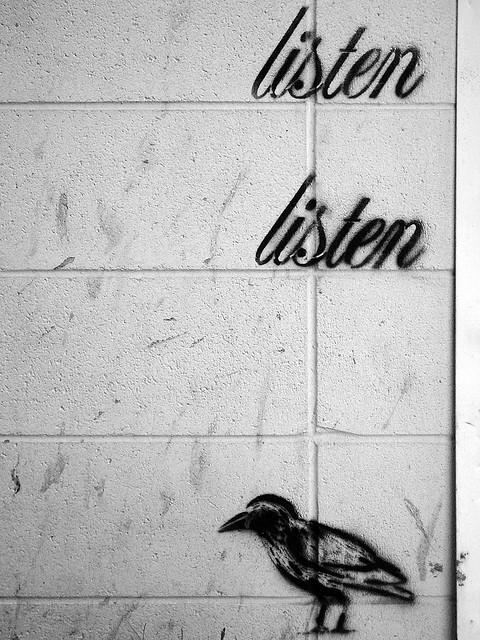
Listen more.
Do not give advice, do not explain yourself, do not critique the way we choose to express ourselves, do not question the veracity of our experiences.
Just listen.


 Karen Pickell: Between
Leave a comment